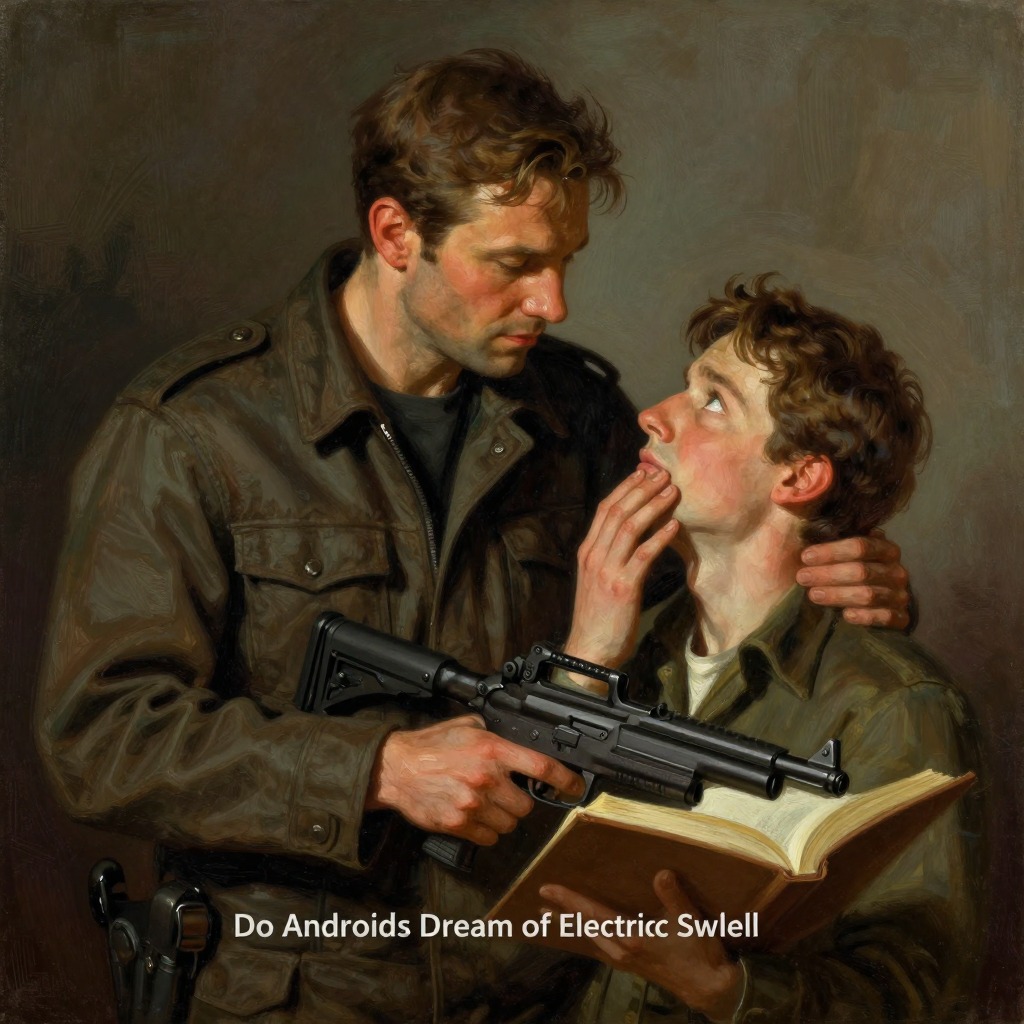
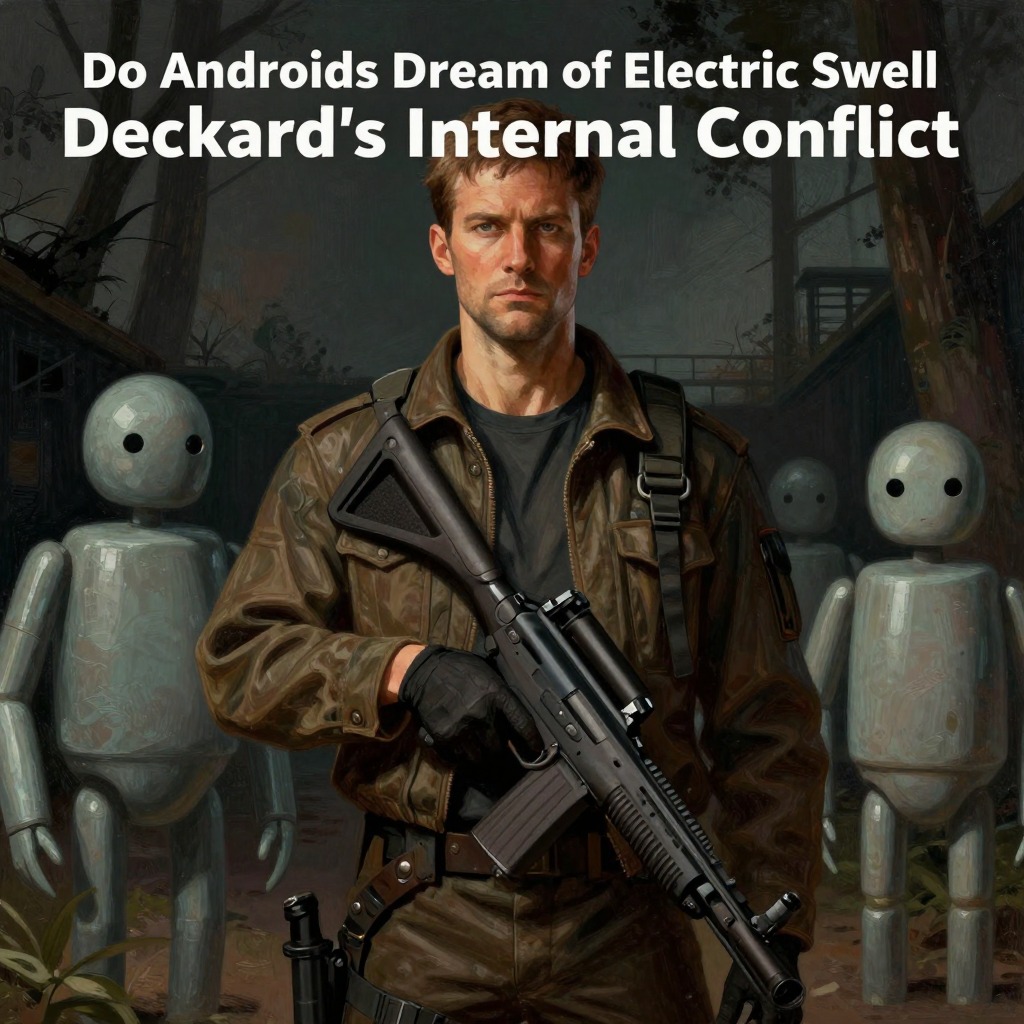
Phil Resch and Rick Deckard
Phil Resch and Rick Deckard meet under extraordinary circumstances that immediately define their relationship as one of mutual suspicion and forced alliance. Resch is introduced as a bounty hunter attached to the Mission Street Hall of Justice, a police station that Deckard soon discovers is run by androids. When Deckard is arrested by the android Officer Crams and brought to this station, Resch is summoned by his superior, Inspector Garland, to examine the newcomer. Garland, himself an android, hopes to use Resch to eliminate Deckard. However, Resch, acting on his own instincts and professional paranoia, kills Garland instead, saving Deckard's life. From the outset, Resch demonstrates a predatory, almost instinctual ability to detect and destroy androids, a skill that Deckard both admires and fears.
The Partnership and Its Uneasy Foundation
After escaping the android-infested police station, Resch and Deckard form a temporary partnership to hunt the remaining escaped Nexus-6 androids. Resch, who has worked for three years under the direction of androids without knowing it, is shaken by the revelation but quickly refocuses on the task at hand. He handcuffs himself to Deckard to maintain the pretense of an arrest while they leave the building, then releases him once they are airborne. Their first joint mission is to retire Luba Luft, an android opera singer. At the museum, Resch's method of killing is swift and brutal: he shoots Luba without hesitation, even as she pleads for her life. Deckard, disturbed by Resch's apparent enjoyment of the act, destroys the art book he had just bought for Luba, a gesture that Resch cannot understand. This moment crystallizes the fundamental difference between the two men: Resch kills with clinical detachment, while Deckard is haunted by the humanity he perceives in his victims.
The Voigt-Kampff Test and the Question of Identity
The central crisis of their relationship comes when Deckard must administer the Voigt-Kampff empathy test to Resch. Luba Luft, before her death, had claimed that Resch himself is an android, a charge that Garland had also implied. Resch, desperate to know the truth, demands the test. He speaks of his pet squirrel, Buffy, which he loves and cares for, as evidence of his humanity. Deckard, however, is deeply conflicted. He has already begun to empathize with androids, and he fears that Resch's coldness toward them might be a sign of android nature. The test results show that Resch is human, but Deckard identifies a defect in Resch's empathic ability: his feelings toward androids. Resch, relieved, dismisses this as irrelevant, but Deckard realizes that the real problem lies within himself. He has begun to feel empathy for androids, a response that Resch finds incomprehensible and even dangerous. This revelation shatters Deckard's self-image and leads him to question his entire career.
The Aftermath and the Moral Divide
After the test, Resch and Deckard part ways, but the encounter leaves a lasting mark on Deckard. Resch's cynical advice—to sleep with an android before killing her—becomes a dark prophecy that Deckard nearly fulfills with Rachael Rosen. Resch represents the path Deckard could have taken: a bounty hunter who kills without remorse, who sees androids as nothing more than machines to be destroyed. Deckard, however, cannot follow that path. His empathy for Luba Luft, his love for Rachael, and his horror at Resch's methods all point to a fundamental change. The relationship between Resch and Deckard is not one of friendship or enmity, but of a mirror held up to the soul. Resch shows Deckard what he might become, and Deckard recoils. In the end, Deckard's encounter with Resch is a catalyst for his own moral crisis, pushing him toward a final confrontation with the meaning of his work and his own humanity.